
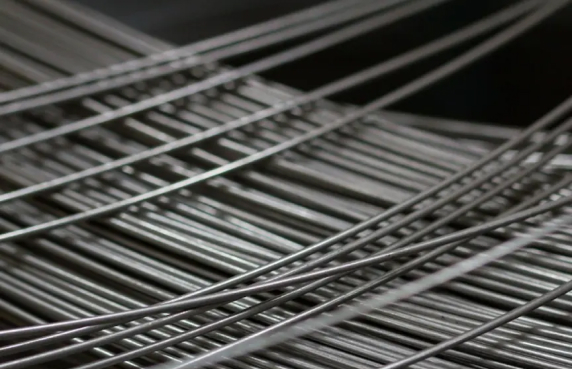
When you need to order or discuss wire there are certain common and uncommon terms you should know from Diameter to Temper to more, Sunset Wire has you covered.

Understanding the basic terms used in the wire industry helps buyers, engineers, and sourcing professionals communicate more clearly about product requirements.
The words used to describe wire products are more than technical labels—they help define performance, manufacturing requirements, and application fit. When buyers understand common wire terms, they can ask better questions, interpret specifications more accurately, and make more confident purchasing decisions.
Abrasion is also known as surface wear or damage caused by scraping, rubbing, or friction against a rough or hard surface.
Abrasion Resistance is the ability of a wire to resist surface wear, scuffing, scraping, or crushing during use.
Alloy is a metal material made by combining two or more elements to achieve specific properties such as strength, corrosion resistance, conductivity, or temperature stability.
American Wire Gauge (AWG) is a gauge-based system for describing wire size as an alternative to decimal diameter.
Annealed is a softened wire condition produced through heat treatment to improve flexibility, workability, and handling, often used when easier tying, bending, or forming is required.
AS9100-Certified is a quality designation indicating conformance to an aerospace-focused quality management standard used for high-performance manufacturing environments.
ASTM, short for ASTM International (formerly the American Society for Testing and Materials), is a standards organization that publishes technical standards used to define material requirements, test methods, dimensions, performance criteria, and quality expectations across many industries, including metals and wire products.
ASTM F138 is a medical-material standard associated with stainless steel used in surgical implants and other medical applications where corrosion resistance and biocompatibility are important.
ASTM F899 is a medical-material standard associated with stainless steels used in surgical instruments and related medical wire applications.
Austenitic Alloys are a category of stainless or related alloy materials selected for performance characteristics such as corrosion resistance and formability in wire applications.
Austenitic Stainless Steel is a group of stainless steel alloys used in many wire grades and applications where corrosion resistance, versatility, and ease of fabrication are important.
Bar Wire is a type of wire used in aerospace, military, and defense applications where strength, consistency, and precision matter.
Belt Wire is a type of wire used to reinforce belts in automotive and industrial applications, helping provide the strength and durability needed for products such as timing belts, serpentine belts, V-belts, and conveyor belts.
Biocompatible is a term used to describe medical wire that is designed not to cause adverse reactions in the patient’s body.
Blanket Order is a long-term purchase agreement used as a way to streamline recurring material purchases, improve availability, and support planned releases over time.
Brush Wire is a wire used as a bristle-like component in brush applications, helping provide cleaning, polishing, or electrical contact performance depending on the strength, flexibility, and configuration required.
Centerless Grinding is a finishing process used to improve wire surface quality and dimensional consistency by grinding the material to a fine, polished finish without mounting it on centers.
Certifications are formal quality or compliance credentials that verify a manufacturer or product meets defined industry standards, such as quality-management requirements or aerospace-specific requirements.
Chemical Processing is an industrial application area where wire materials are selected for resistance to corrosion, chemicals, and demanding service environments.
Cleanliness is a surface-quality characteristic of wire referring to the absence of contaminants, residue, or irregularities that could affect performance, especially in medical, aerospace, electronics, or food-related applications.
Coating is a surface layer applied to wire to improve performance characteristics such as corrosion resistance, lubricity, tool life, or application-specific handling.
Coils are a common wire packaging format in which wire is wound into circular or spiral bundles for storage, shipment, and feeding into downstream processes.
Cold Forming is a manufacturing process in which metal is shaped at ambient temperature without heating, allowing wire to be formed into parts while maintaining tight dimensional control and mechanical consistency.
Cold Heading Wire is a wire specifically designed for cold heading operations, where it is formed under pressure into fasteners or components without heating; key requirements typically include formability, ductility, surface quality, and consistent mechanical properties.
Cold-Worked is a material condition created by mechanically deforming metal below its recrystallization temperature, which increases strength and hardness relative to its annealed state.
Copper is a metal used in certain wire products and specifications where conductivity, corrosion resistance, or specific application requirements are important.
Corrosion Resistance is the ability of a wire material to withstand degradation caused by moisture, chemicals, or environmental exposure, making it a critical property in medical, industrial, marine, and high-performance applications.
Corrosion-Resistant is the characteristic of wire that describes the level to which a wire or alloy is designed to resist rusting, oxidation, or chemical attack.
Cut Lengths are straightened pieces of wire supplied in specified lengths instead of continuous coils or spools, often used when a process requires ready-to-use segments.
Decimal Diameter is a wire sizing method that expresses wire thickness as a decimal measurement rather than by a gauge designation such as AWG.
Dental Wire is a thin metallic wire used to make braces, retainers, and other dental products; it may also be used to stabilize dentures and in certain oral surgical procedures, such as jaw wiring.
DFARS, short for the Defense Federal Acquisition Regulation Supplement, is a set of regulations that supplements the Federal Acquisition Regulation for U.S. Department of Defense procurement and covers areas such as specialty metals sourcing, quality, and supply-chain compliance.
DFARS Compliance is conformance with DFARS requirements for defense-related materials and supply, including traceability, documentation, and sourcing rules for specialty metals used in Department of Defense contracts.
DFARS Special Metals Clause is a DFARS-related requirement that applies to specialty metals used in defense contracts; certain wire products may be supplied to meet this clause when specified.
Diameter is the thickness of the wire, usually measured in inches or millimeters, and one of the most important specifications used when selecting or ordering wire.
A Die is a wire drawing tool with a precisely sized opening used to reduce wire diameter and help control final size and surface quality.
Domestically Drawn Wire is a wire that is drawn and processed in the United States for industrial, OEM, distributor, and application-specific requirements.
Drawability is a material and process characteristic describing how well wire can be drawn or formed without developing surface defects, internal fractures, or cracking during manufacturing.
Drawn Wire is a wire that has been reduced to its required size through a drawing process and then supplied in the required alloy, diameter, length, and package form.
Ductility is the ability of wire to deform or be formed without cracking, making it especially important in cold heading, forming, and other manufacturing processes.
Durability is the ability of a wire product to maintain performance and integrity under service conditions such as wear, stress, or demanding environments.
Durable is a descriptive term used for wire products designed to perform reliably in demanding environments or applications requiring long service life.
EPQ Wire, short for Electro-Polish Quality Wire, is a type of wire that has undergone a specialized electro-polishing process to achieve a high level of surface smoothness, cleanliness, and uniformity for demanding applications.
Fasteners are mechanical components such as bolts, screws, rivets, pins, and threaded parts that join or secure materials together; wire is often used to manufacture or support the production of fasteners.
Filter Wire is a type of wire used in filtration applications to help remove or separate particles, impurities, or contaminants from a fluid; it is often made from stainless steel or other corrosion-resistant alloys.
Finish is the surface condition of the wire, including characteristics related to appearance, texture, and any coating or treatment that may affect performance or application fit.
Flexibility is the ability of wire to bend or be handled easily without breaking, an important property in tying, forming, and installation-related applications.
Formability is the ability of wire to be formed into parts or components without cracking, especially in cold heading and other high-volume manufacturing processes.
Formed Wire is wire that is shaped into a specific end product or application-oriented configuration rather than supplied only as a straight or coiled raw material form.
Forming Wire is another name for Electro-Polish Quality (EPQ) wire, used for applications that require high surface smoothness, cleanliness, and uniformity.
Full Hard is a temper condition describing wire supplied in a harder, higher-strength state relative to softer or annealed conditions.
Fully Annealed is a softened wire condition used where flexibility and ease of handling are important, such as tying and bundling applications.
Galvanized is a type of coated wire finish commonly used where added corrosion protection is needed, including tying, securing, and general-purpose industrial applications.
Gauge is a way of describing wire size using a gauge-based system rather than decimal diameter.
Grade is a material classification used to identify a specific alloy or composition, helping define wire properties such as strength, corrosion resistance, and application suitability.
Hard is a wire temper or condition indicating greater hardness and strength than softer or annealed conditions.
Heat Resistant is a characteristic that describes wire designed to maintain performance in elevated-temperature environments where durability and reliability are required.
High Tensile Strength is a material property describing wire that can withstand high pulling stress before failure, often associated with strength-critical applications.
Internal Fractures are defects or failures within the wire material that can occur during forming if the wire does not have sufficient ductility or surface/process quality.
J17-4 (UNS S17400) is a stainless steel wire specification used for type 17-4 stainless steel wire rod supplied in coil and intended to be cold drawn into wire or bar.
K-Wire, short for Kirschner wire, is a thin, rigid medical wire made from stainless steel or other biocompatible materials, typically supplied with a pointed tip and used in orthopedic surgery and related medical procedures.
Lengths is a term meaning the supplied measurement of wire, whether provided in continuous packages or in straightened and cut pieces to a specified size.
Lock Wire is a type of wire used to secure fasteners, bolts, nuts, and related hardware so they do not loosen unintentionally under vibration, movement, or stress.
Marine Wire is a wire designed for use in marine and coastal applications, typically built to resist moisture, salt, oil, and vibration in boats, yachts, shipyards, and similar environments.
Martensitic Alloys are a category of alloy options referenced for cold heading and specialty wire applications where specific strength and performance characteristics are required.
Material Grade is the specific alloy designation or classification used to identify a wire material and communicate its expected properties, performance, and application suitability.
Mechanical Properties are the physical performance characteristics of wire materials, such as strength and behavior under load, that help determine suitability for forming, fastening, and end-use applications.
Medical Wire is a specialized type of wire used in medical applications, procedures, and devices, often where fine diameters, precision, corrosion resistance, and biocompatibility are important.
Millimeters are a metric unit of measurement commonly used to specify wire diameter or size.
Machinability is the ease with which a material can be cut, drilled, or machined, a property referenced for certain stainless wire grades and specialized alloy compositions.
Nickel is a metallic element used in wire alloys to help improve properties such as corrosion resistance, temperature performance, and overall application durability.
Nickel 200 is a commercially pure nickel alloy known for excellent resistance to corrosive environments, especially alkaline solutions and neutral or alkaline salts, and used in applications such as chemical processing, food processing, aerospace, marine, power generation, and heat exchangers.
Nickel 201 is a lower-carbon variation of Nickel 200 that offers enhanced resistance in certain corrosive environments and is often selected where carbon content must be minimized to reduce sensitization risk.
Nickel 205 is a nickel alloy containing small amounts of aluminum and titanium to improve performance in electrical and electronic applications, including terminals, devices, and mechanical supports.
Nickel 800, also known as Incoloy 800, is a nickel-iron-chromium alloy valued for resistance to high-temperature oxidation and carburization, along with good strength and corrosion resistance.
Nickel Alloy 400, also known as Monel 400, is a nickel-copper alloy that provides excellent corrosion resistance, high strength, and good mechanical properties across a wide temperature range, especially in marine and chemical environments.
Nickel Alloy 600 is a nickel-chromium alloy known for its combination of corrosion resistance and high-temperature strength, commonly used in heat exchangers, chemical processing, power generation, aerospace, furnace components, and the nuclear industry.
Nickel Alloy X-750 is a precipitation-hardenable nickel-chromium alloy used in demanding high-temperature applications such as aerospace, gas turbine engines, nuclear reactors, and industrial processing.
Orthodontic Wire is a type of wire used in braces to help straighten and align teeth, typically supplied in different sizes, shapes, and thicknesses to support different stages of treatment and patient needs.
Oxide Coated is a wire finish or surface condition in which an oxide layer is present on the material, referenced in available alloy and specification offerings.
Pin Wire is a thin, rigid wire made from stainless steel or other biocompatible materials, typically supplied with a pointed tip and used in orthopedic surgery and other medical procedures.
Pre-Measured Lengths are wire lengths prepared in advance to reduce additional cutting, simplify processing, and help minimize leftover scrap in production.
Quarter Hard is an intermediate temper condition produced by limited cold working after annealing, giving wire or strip more hardness and strength than annealed material while retaining more formability than half-hard or full-hard tempers.
Quench Aging is the aging that occurs after quenching following solution heat treatment, which can affect the final properties of the metal.
Quench and Temper is a heat-treatment process in which metal is first quenched and then tempered to achieve a desired balance of hardness, ductility, and toughness.
Redraw is the drawing of wire that has already been drawn to an intermediate size, through a further series of dies, in order to reach the required final wire size.
Reduction of Area is the percentage decrease in wire cross-sectional area from entry to exit during drawing; it is one of the main ways the degree of drawing is measured.
Reduction Ratio is a drawing parameter that compares the original cross-sectional area with the final cross-sectional area after a pass, and is used to describe the severity of deformation in wire drawing.
Residual Stress is the stress locked into a drawn wire after processing because deformation during drawing is not perfectly uniform across the cross-section; in wire drawing, unfavorable tensile residual stresses near the surface can reduce processability and durability.
Rod is an elongated semi-finished metal product of larger diameter than wire that commonly serves as the starting stock for wire drawing; rods may also be drawn from larger rounds for machining, forging, and related processes.
Rounds are wire or rod supplied in a circular cross-section, commonly contrasted with square, hex, or other shaped sections in wire production and supply.
Spool is a form of wire packaging around which wire is wound in measured or controlled lengths to support efficient payout and reduce additional cutting or handling during use.
Spooled Wire is wire wound onto a spool or reel for controlled payout, easier handling, and reduced tangling during storage, transport, and machine feeding.
Spring Wire is wire intended specifically for the manufacture of springs, typically supplied with controlled chemistry, tensile properties, and dimensional consistency appropriate for spring forming and service.
Stainless Steel Wire is corrosion-resistant metal wire made from iron-based alloys containing chromium, nickel, and other elements, commonly used where strength, corrosion resistance, and versatility are required.
Straight & Cut Wire is wire supplied in uniform straight lengths rather than in coils or spools, typically used where consistent piece length and ready-to-use straightness are important.
Surface Finish is the condition and quality of the wire surface after processing, including its smoothness, cleanliness, and uniformity, all of which can influence performance and appearance.
Temper is the metallurgical condition of a wire or metal product as determined by thermal treatment, cold working, or a combination of both, and used to describe the resulting hardness, toughness, strength, and formability.
Tensile Strength is the maximum stress a wire can withstand in tension before breaking, commonly expressed in PSI, N/mm², or similar stress units.
Tensile Test is a mechanical test used to determine tensile properties such as strength, elongation, and related performance characteristics of wire or spring material.
Tie Wire is a generally soft, flexible wire used to fasten, bundle, reinforce, or secure materials such as rebar, fencing, insulation, wire runs, pipe, and mesh.
Tolerance is the allowable variation in the wire’s diameter or other dimensions. Even if a wire is ordered to a specific size, there is usually an acceptable range.
True Strain is a wire-drawing deformation measure based on the continuous change in cross-sectional area during drawing, used in analytical models of draw stress, force, and material flow.
Ultimate Strength is the maximum conventional stress, whether tensile, compressive, or shear, that a material can withstand before failure.
Ultimate Tensile Strength (UTS) is the maximum tensile stress a material can withstand before fracturing; in wire and metal testing, it is commonly determined from the highest point on the stress–strain curve during tensile testing.
Ultrasonic Testing is a nondestructive testing method that uses ultrasonic waves to locate internal inhomogeneities or discontinuities in sound-conductive materials without damaging the part.
Unified Numbering System (UNS) is an alphanumeric identification system for metals and alloys that assigns each material a prefix letter plus five digits to provide a single, standardized designation across different numbering systems. It was developed jointly by ASTM International and SAE International to improve consistency in indexing, recordkeeping, data retrieval, and cross-referencing. A UNS number is not a full material specification; it identifies the alloy or composition family but does not by itself define required product form, condition, heat treatment, quality, or testing requirements.
Uniform Elongation is the strain level reached at the point of ultimate tensile strength, before deformation localizes into necking.
Uniformity Test is a mechanical test referenced in spring-wire standards to check consistency of the material, often alongside bend, wrap, and tensile-related tests.
Uncoiling is the controlled removal of wire from a coil package so that it can be fed, straightened, or processed without tangling, kinking, or upsetting the coil lay.
Unwinding is the payout of wire from a spool, reel, or coil during handling or production, ideally done in a controlled manner to preserve wire integrity and avoid deformation.
Upset is a localized increase in cross-sectional area caused by the application of pressure during mechanical fabrication or welding.
Vacuum Refining is refining metal under vacuum conditions, typically to remove gaseous contaminants and improve cleanliness and final alloy quality.
Vickers Hardness Test is a hardness-measurement method in which a pyramid-shaped diamond indenter is pressed into a polished metal surface and the resulting indentation is measured to determine hardness.
Viscosity is a lubricant property that influences how the lubricant film behaves during wire drawing; film thickness and lubrication mode in drawing depend in part on lubricant viscosity, along with pressure, temperature, and relative surface speed.
Weaving Wire is wire that is interlaced or woven with other materials to create patterns, structures, or woven products, such as wire mesh or wire cloth.
Wet Drawing is a wire-drawing method in which the wire and die are immersed in, or continuously supplied with, liquid lubricant during processing to improve cooling, lubrication, productivity, and die life.
Wire is the product itself—a long, continuous metal form that is typically drawn through dies to reduce its diameter.
Wire Area Reduction Percentage (A%) is a wire-drawing measure that expresses the percentage reduction in cross-sectional area as wire passes through a die during a draw.
Wire Density (ρ) is a material property used in calculations involving mass, volume, and process analysis. In wire-drawing terminology, ρ is the symbol commonly used for density.
Wire Diameter is the thickness of the wire, usually measured in inches or millimeters, and one of the first and most important specifications requested. In wire-drawing notation, Ø commonly denotes diameter.
Wire Drawing is a metal-forming process in which coarse wire, rod, or similar stock is pulled through a tapered die to reduce diameter and increase length without removing material, usually as a cold-working operation.
Wire Elongation Percentage (E%) is a measure used in wire terminology to express the percentage increase in wire length during or after deformation and testing.
Wire Gauge is another way of describing wire size; depending on the application, wire may be identified by a gauge system such as AWG rather than by decimal diameter.
Wire Packaging is the package format in which wire is supplied, such as coils, spools, reels, straight lengths, or cut lengths, depending on handling and application requirements.
Wire Rod is a hot-rolled or larger-diameter rod stock that commonly serves as the starting material for wire drawing, where its cross-section is reduced through successive dies to make wire.
Wire Stands are used to support larger-ID coils in coiled or shaped wire packaging.
Work Hardening is the strengthening and hardening of wire caused by plastic deformation during cold-working processes such as drawing or rolling, usually accompanied by reduced ductility.
Wrap Test is a mechanical wire test used to determine the ability of metallic wire to undergo plastic deformation during wrapping around a mandrel without cracking or fracturing.
X-750 is short for Nickel Alloy X-750, a precipitation-hardenable nickel-chromium alloy used in high-temperature applications such as aerospace, gas turbine engines, nuclear reactors, and industrial processing.
X-Ray Diffraction is a nondestructive analytical technique that studies how X-rays interact with crystalline materials to produce diffraction patterns, which can then be used to evaluate structure and material characteristics.
Yield Point is the point on a stress–strain curve at which a material stops behaving purely elastically and begins to deform permanently; beyond this point, unloading will not return the material to its original shape.
Yield Strength is the stress at which a material begins to undergo a specified permanent (plastic) deformation; in wire and metal testing, it is commonly defined using a 0.2% offset on the stress–strain curve.
Young’s Modulus is the property used to describe the elastic behavior of objects such as wires, rods, or columns when they are stretched or compressed under loads below the yield-strength limit.
Zinc is a metallic element widely used to protect wire and steel because it provides corrosion resistance and acts sacrificially to protect the underlying steel when used as a coating.
Zinc-Coated Wire, also referred to as galvanized wire, is steel wire coated with zinc to improve corrosion resistance. Standards for this type of wire commonly classify it by temper and general-use requirements.

Wire drawn and delivered to meet your timelines
We draw, grind, cut and package AS9100-certified stainless steel and nickel alloy wire for a wide variety of applications. With available inventory and the ability to meet a wide range of specifications, our lead times are typically 1-2 weeks.
Wire drawn and delivered to meet your timelines
We draw, grind, cut and package AS9100-certified stainless steel and nickel alloy wire for a wide variety of applications. With available inventory and the ability to meet a wide range of specifications, our lead times are typically 1-2 weeks.
Visit us at Spring World 2026 and IFE 2026 from October 7th-9th 2026