

304 stainless steel wire is identified under multiple naming conventions, including grade, alloy, and UNS designations; depending on the specification, industry, or standard being used.
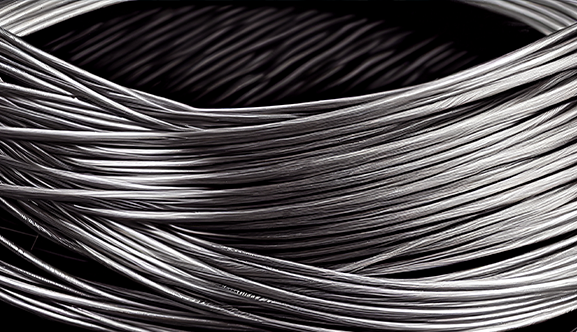
Stainless Steel 304 alloys are known by several names depending on the standard, specification, or drawing being used. Understanding these alternate names matters because the same alloy can appear under different designation systems across quotes, certifications, standards, and legacy prints. For buyers and engineers working with wire, this is especially important, since Stainless Steel 304 may be referenced through material standards tied to specific product forms and applications rather than by one simple trade name alone.
AISI 304 is the designation derived from the American Iron and Steel Institute (AISI) stainless steel grade classification system. Best for engineering discussions, procurement cross-references, technical specifications, and older North American documents that continue to use AISI terminology. The use of AISI 304 immediately identifies the material as the widely recognized austenitic stainless steel grade rather than simply a commercial trade name, making it useful for technical communication, material selection, and specification review across a wide range of industries.
UNS S30400 is the official Unified Numbering System (UNS) designation for Stainless Steel 304. Best for formal material identification, cross-referencing between industry standards, quality assurance documentation, mill certifications, engineering specifications, and multi-standard procurement requirements. This designation serves as the clearest and most unambiguous identifier when matching Stainless Steel 304 across different specification systems and international standards. It is especially useful when a drawing, certification, purchase order, or compliance document requires a formal material designation rather than a commercial or trade-style name.
Grade 304 is a generic technical descriptor commonly used in datasheets, engineering references, technical articles, and educational materials for the alloy. Best for technical overviews, material comparisons, specification discussions, and informational content. It reads naturally in explanatory writing and is particularly useful when comparing stainless steel grades, such as Grade 304 vs. Grade 304L for example.
18-8 Stainless Steel is a family descriptor based on the chromium-nickel chemistry of this stainless class. Technical sources place 304 within the familiar 18-8 austenitic stainless family. Best for high-level educational content, family-level chemistry explanations, and simplified alloy grouping. This is helpful when explaining chemistry and alloy family relationships, but it is not precise enough on its own for ordering material, because multiple grades can fall under the 18-8 umbrella.
A2-70 Stainless Steel is a fastener property-class designation commonly associated with Stainless Steel 304 fasteners. Best for bolts, screws, nuts, washers, and procurement specifications where both material type and mechanical properties are important. The designation A2-70 identifies a corrosion-resistant 304-grade stainless fastener with a minimum tensile strength of 700 MPa, making it a widely recognized specification in industrial, construction, and manufacturing applications.
18Cr-8Ni Stainless Steel is a chemistry-based designation commonly used to describe Stainless Steel 304 based on its approximate composition of 18% chromium and 8% nickel. Best for educational content, alloy comparisons, and technical discussions focused on stainless steel chemistry. The designation 18Cr-8Ni Stainless Steel helps identify the alloy as part of the widely used 18-8 austenitic stainless steel family and provides a straightforward way to communicate its fundamental composition and corrosion-resistant properties.
Chromium-Nickel Austenitic Stainless Steel is a broad technical description used to classify Stainless Steel 304 based on its alloy chemistry and crystal structure. Best for educational content, metallurgy discussions, and technical overviews of stainless steel families. This designation highlights the alloy’s chromium and nickel content, which contribute to its corrosion resistance, formability, and toughness, while identifying it as part of the austenitic stainless steel family.
Stainless Steel 304 has a density of approximately 8.00 g/cm³ (0.289 lb/in³) and is composed of 18.00–20.00% chromium, 8.00–10.50% nickel, 1.00% silicon, 2.00% manganese, 0.08% carbon, and 0.030% sulfur, with the balance consisting of iron. It is a tough, ductile, austenitic stainless steel known for its excellent corrosion resistance, formability, and weldability.

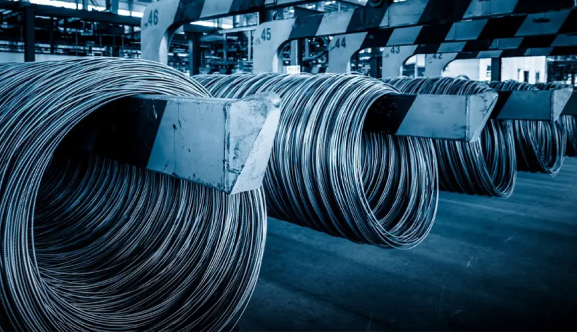

Stainless steel wire alloys are used in various industries, including:

Sunset Wire can manufacture custom diameters of SS304 for your project. Common sizes of Type 304 include:
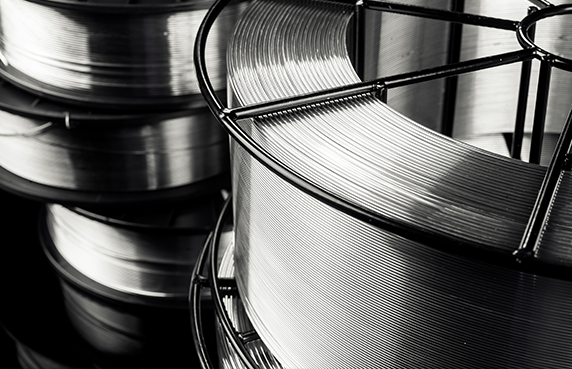
Sunset Wire stocks a large inventory of stainless steel wire to ensure you get it fast. Get your wire in 1 lb cans, 1 lb spools or 5 lb spools. Other spool sizes are available upon request.

Why Choose Sunset Wire?
Sunset Wire provides domestically drawn wire in various diameters, lengths and packages. Get your stainless steel wire delivered anywhere in the US thanks to our large inventory and dedicated supply chain management capabilities.
Announcing our new wire calculator!